

Two boys stood along the shore of Palma Sola Bay with a pair of sailboats they had built themselves. Not boats they could climb aboard; these were models, small enough to launch from shore and let the wind do the rest.
The boys sent them sailing across the Manatee River toward Sneads Island, where a friend waited to catch the little boats, turn them around and send them back. Whichever one returned first won.
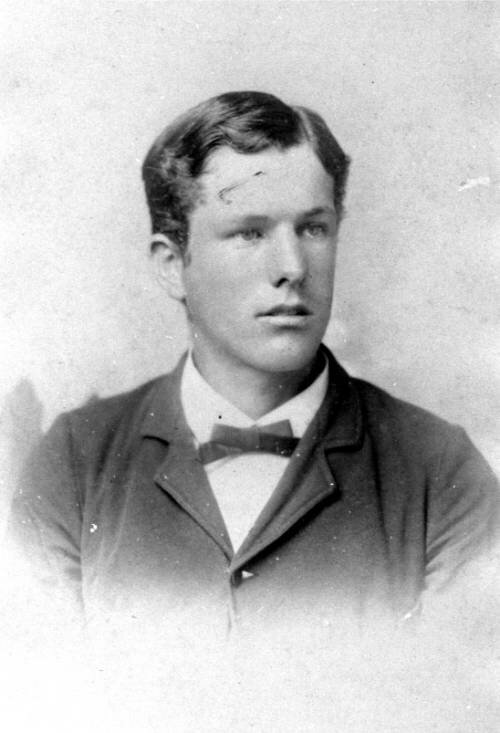
Those boys were Pillsburys, Asa and Ed, two brothers growing up along Palma Sola Bay in the late 1800s. They couldn't have known it then, but boats would come to define much of their lives. They would grow up to build the real things.
From there, the boats got bigger.
Decades later, the same stretch of water would separate the brothers' boatbuilding operations: Asa on the Palma Sola side and Ed across the river on Sneads Island.
And if the stories they left behind are any indication, things were about to get interesting: a childhood friend with a very fast boat and some very illegal cargo, a perfectly good vessel sawed in half and, somewhere else in this wonderfully unpredictable maritime world, a bunch of pigs having a barf-o-rama.
To understand the Pillsbury brothers, you have to picture the Manatee River before bridges and automobiles reorganized life around roads.
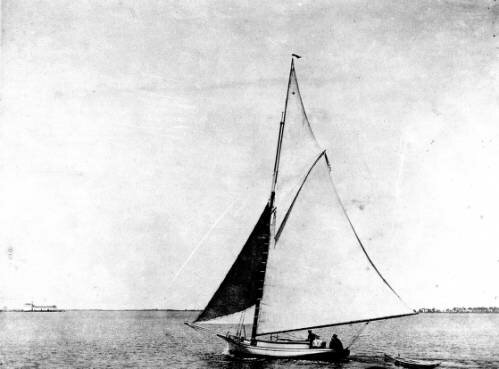
When the boys were growing up, sailboats weren't recreational scenery. They were a way of life. In his 1963 oral history, Asa remembered fishing as one of the area's principal industries and Palma Sola as once being “the biggest town on the river.” Fish and cattle moved by boat. Steamers brought goods from Tampa and beyond. Even ice arrived aboard sailing ships from Maine.
And freight could get interesting. In another Manatee County oral history, E. Lawrence Kretschmar recalled his family’s sailboat, the WILDGOOSE, once hauling 10 or 12 pigs from present-day Nokomis to Tampa. Then they hit a squall.
If Stand By Me gave us the famous “barf-o-rama,” the Manatee River had its own version decades earlier. “Pigs get seasick just the same as people do,” Kretschmar explained, and these pigs got very seasick. By the time the WILDGOOSE reached Tampa, the smell was nearly unbearable. The pigs came off the boat, but the event lingered: Kretschmar said it took about two months of washing the deck to get rid of the smell. Then again, that was life on the water.
And for brothers fascinated by boats, it was a pretty good place to come of age.
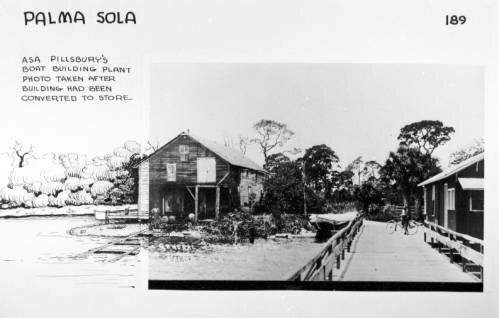
Asa eventually went from racing models to net fishing for mullet and building sailboats near the Palma Sola post office. Ed found his own life on the water, running Captain John Fogarty's schooner, The John Fogarty, and tending navigational lights around Tampa Bay.
Eventually, Ed crossed the river and established Pillsbury's Boat Ways on Sneads Island, on the waterfront that would later become Snead Island Boat Works.
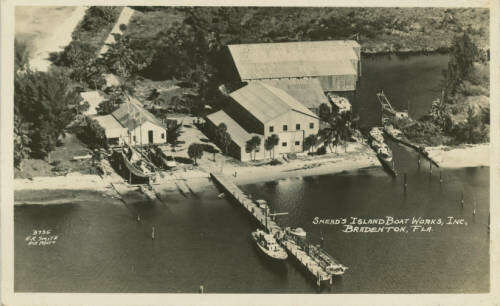
Two brothers, two boatyards and a river between them, with a little brotherly rivalry thrown in. During his 1963 interview, Asa made it clear who finished first in the race for maritime success.
“I was building sailboats long before the Sneads Island boatworks started. That was my brother that started that.”
The Pillsbury brothers turn up in plenty of colorful local stories, but some of the best happened to collide with much larger moments in history.
One of the Pillsburys’ old Palma Sola schoolmates, Eddie Mead, found his calling during Prohibition. With federal “revenuers” patrolling Florida’s bays and passes for smugglers bringing liquor from Cuba, speed mattered. Mead had a boat built at the Sneads Island yard with powerful Sterling engines, and Asa remembered it as exceptionally fast, used to outrun federal officers while hauling liquor from Cuba.
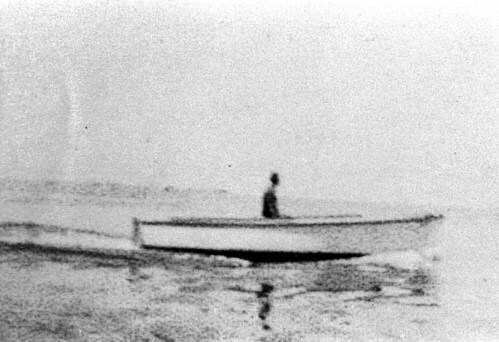
Asa didn’t romanticize his old schoolmate’s success. “He made a lot of money,” he recalled, “but it didn’t do him any good.”
Then there was the PEACE, a roughly 40-foot workboat used to haul fuller’s earth from Ellenton to Tampa. When its owners needed more cargo room, they took it to Pillsbury Ways, cut it in half with a logging saw and added 20 feet in the middle. Kretschmar recalled that a 65-foot vessel required another operator or captain’s license, so they stopped at exactly 64 feet.
During World War I, the enlarged PEACE hauled roughly 300 hand-hewn heart-pine railroad ties at a time to Tampa. Kretschmar remembered making more than 20 trips before the ties continued north and eventually across the Atlantic for use on railroads in France. Florida pine, carried aboard a boat literally sawed in half at Pillsbury Ways, had found its way into the war effort an ocean away.
The stories of fast boats, rum-runners and clever workarounds make the Pillsburys’ world sound adventurous, and it certainly was. But as Asa grew older, another side of him emerged. The boy who had spent his life on Florida’s waters became increasingly interested in protecting pieces of the world he had known.
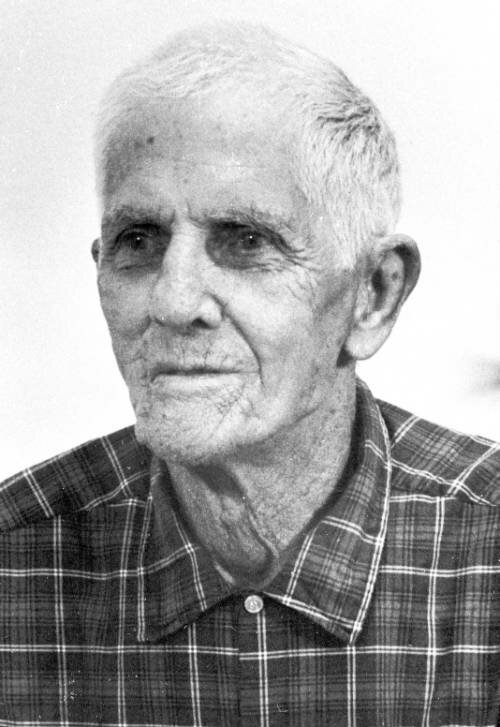
He served as a game warden on Passage Key, helping protect the birds that nested there, and later became fiercely protective of an Indigenous burial mound on his property near Palma Sola Bay. Archaeologists from the University of Florida excavated part of the mound, which Asa said contained the remains of 147 people, but he resisted seeing the entire site disturbed. Until his death in 1969, he petitioned the National Park Service to incorporate the mound into the neighboring De Soto National Memorial.
I think that’s what I like so much about these old stories. The people in these oral histories weren’t standing still. They were building things, hauling things, racing things and occasionally smuggling things. They found ways around problems, whether that meant building a boat fast enough to outrun the revenuers or sawing one in half because they needed more room. And somewhere along the way, they learned that pigs and rough seas are a terrible combination.
As Asa grew older, he tried to preserve pieces of the Florida he had known, from the birds of Passage Key to the ancient burial mound on his property. He couldn’t save everything.
But one little piece of his childhood did survive.
One of the model sailboats Asa built as a boy eventually became part of the collection at the Bishop Museum of Science and Nature. The same kid who once stood on the Palma Sola shoreline waiting to see if his boat would make it across the river and back lived long enough to watch that waterfront become a very different place.
Maps can show us where the boatyards stood. Deeds can tell us who owned the land. Records can give us names and dates. But people remember who built boats first.
They remember why a boat was exactly 64 feet long.
And, thankfully, they remember the pigs.


Comments
No comments on this item
Only paid subscribers can comment
Please log in to comment by clicking here.