

Eleven-year-old Nick Walsh had a particular reason for wanting to spend the night at Bradenton’s newly restored Hampton Inn. He had heard there were ghosts. When the former Manatee River Hotel reopened in November 2013, Nick and his grandmother, Mary Walsh, were part of the first family to check in. After years of watching the landmark deteriorate, Bradenton had its hotel back, complete with a reputation that interested at least one young guest, according to Charles Schelle’s reporting for the Bradenton Herald.
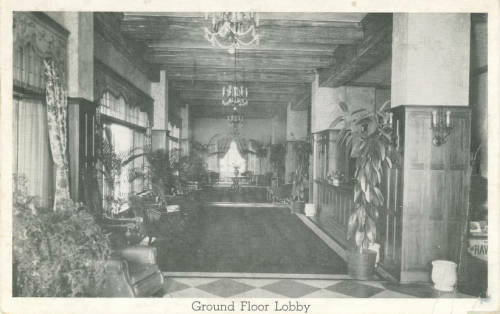
The stories had circulated during construction. Police Sgt. Tony Cerniglia recounted a security guard’s account of a tile worker spotting a woman in white at the end of a fourth-floor hallway. The worker supposedly captured her on his cellphone. Cerniglia, however, had never seen the photograph. Even the most promising apparition arrived through several intermediaries, a distinction Schelle carefully preserved in his November 2013 report.
Nick had plenty of company in his curiosity. From Bradenton to Sarasota and across Tampa Bay, historic hotels have collected stories of mysterious guests and unexplained disturbances. Following those tales takes us through buildings that have served as retirement homes, student housing and apartments, with each new chapter adding something to the stories told about them.
The hotel’s original accommodations offered a different sort of surprise: 250 small rooms furnished with Murphy beds. Upstairs, a rooftop garden had a covered band shell for entertainment. The building opened in 1926, later served as a retirement residence and eventually stood boarded up. Its renovation returned it to hotel use, according to Schelle’s research in the Bradenton Herald archives.
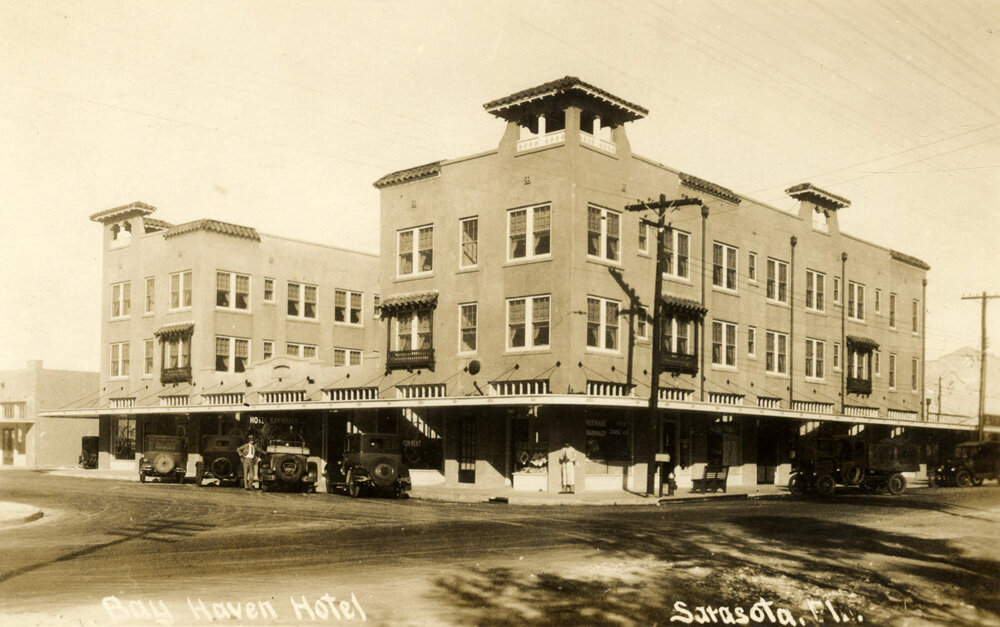
At Sarasota’s Bay Haven Hotel, a family’s fortunes unraveled alongside the land boom. Developer Walter V. Coleman completed the building after its original developer returned the unfinished property to him for one dollar in August 1926. An October newspaper announcement advertised rooms at $2.50 for a single and $3.50 for a double, according to former Sarasota County historian Ann Shank’s account, credited to the Sarasota County History Center.
Coleman and his wife, Lena Sara, were running the hotel when he died in a car accident in 1928. She continued managing it, living there with their children. Then a bank failure took her savings. Unable to keep up the hotel’s insurance payments, she faced a lien, and the family moved out in 1930. The following year, the building became the John and Mable Ringling Junior College and School of Art, Shank records.
The old hotel acquired another resident in campus folklore: Mary, a ghost whose crying allegedly disturbed students in what became Keating Hall. Her story involves an unhappy romance, but the published account offers no archival evidence establishing her identity. The Coleman family’s losses are documented; Mary’s sorrow belongs to the building’s haunting legend, as recounted by Sarasota Magazine.
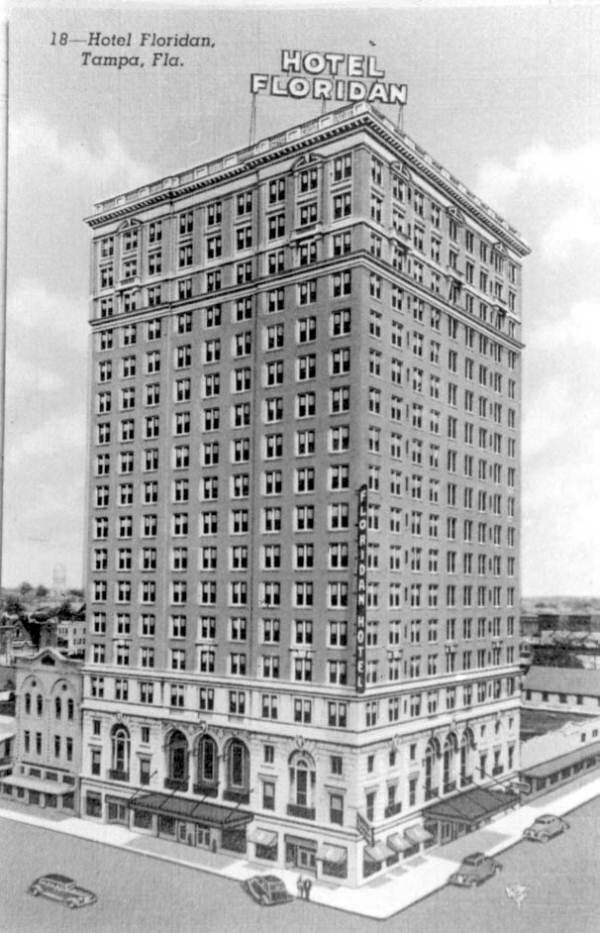
The Floridan rose 19 stories above downtown Tampa when it opened in 1927. Decades later, its guest rooms became studio apartments and weekly or monthly rentals. During that period, residents reportedly heard music and laughter in the hallways, found radio dials moving and encountered faucets that turned on without explanation, according to the Tampa Bay History Center’s account of the building’s folklore.
After fire-code violations closed the Floridan in 1985, it remained vacant for more than 20 years. People still reported lights in the windows and faces looking out. Renovation eventually brought travelers back, and the landmark now operates as Hotel Flor. The reported figures in those windows have never been identified, but the long vacancy that helped give the stories their setting is part of the hotel’s documented history, the History Center explains.
The Don CeSar’s best-known haunting gives its founder, Thomas Rowe, a lost love named Lucinda. In the legend, parental opposition separates them, death follows and the lovers eventually reunite as apparitions. Their supposed meetings at a fountain became part of the hotel’s romantic lore, according to a News-Press article reproduced by Historic Hotels of America.
That same account describes journalist Lane DeGregory’s attempt to trace the story. Hotel staff pointed toward a ghost-story book. Its author, Frances Kermeen, said she had received the tale from a hotel publicity contact. The sourcing went around in a circle, leaving the romance’s historical foundation uncertain. At the Don, even a ghost story can require a little checking at the front desk, as the reproduced News-Press reporting makes clear.
Back in Bradenton, the restored hotel was full on opening night. By morning, staff had received no reports of paranormal activity. Nick Walsh had secured his room; the woman in white had apparently made no reservation, according to Schelle’s account in the Bradenton Herald.


Comments
No comments on this item
Only paid subscribers can comment
Please log in to comment by clicking here.