

Despite its name, the Lido Beach Casino was never a gambling hall, no poker tables, no roulette wheels, not even a slot machine in sight. Instead, the term comes from the Italian casa, meaning house, and reflects an era when Mediterranean-inspired design and language shaped much of Florida’s coastal development.
In many ways, Lido Beach Casino was just that, a community casa, or comfortable place where residents gathered for music, dancing and a good time by the water.
Constructed in 1939 and opening at the end of 1940, the Lido Beach Casino rose along the shores of Lido Key as part of a broader effort to transform the barrier island into a destination for both residents and visitors. Built as a municipal project during the Great Depression, the structure reflected a growing emphasis on public recreation and waterfront access, according to Sarasota History Alive.
The building was designed in the Art Deco style by Sarasota architect Ralph Spencer Twitchell, whose work helped shape much of the region’s early architectural identity. Known for blending modern design with Florida’s coastal climate, Twitchell incorporated clean lines, open-air walkways and shaded spaces that encouraged natural ventilation while framing views of the Gulf. He would later influence what became known as the Sarasota School of Architecture, a movement that gained recognition in the 1940s and 1950s for its climate-responsive design.
.jpg)
To understand the casino at its peak, you have to picture it as it once was. A surviving postcard described it as “a half million dollar municipal attraction…with nothing overlooked to add to the enjoyment of fun lovers,” built of concrete and glass brick and stretching across more than six acres along the Gulf of Mexico.
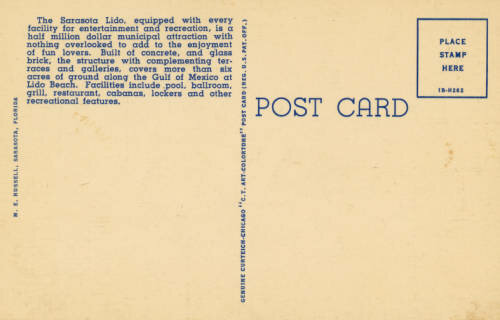
It was designed to withstand the harsh coastal environment, the structure featured sturdy concrete construction alongside decorative touches, including its distinctive molded seahorses, which became one of its most recognizable design elements. The complex included a ballroom, restaurant, grill, cabanas, locker rooms and its iconic swimming pool, creating a self-contained hub for recreation and social life, according to postcard text from the Manatee County Public Library System archives.
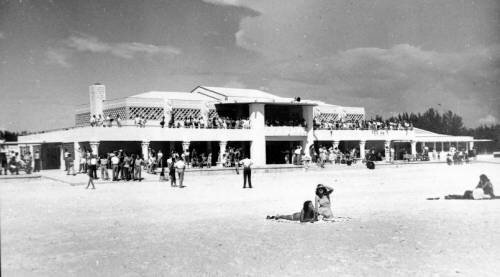
In its heyday, the Lido Beach Casino was the place to be. Big bands filled the ballroom, beauty pageants drew crowds and both locals and tourists gathered for dances, swimming and seaside socializing. It wasn’t just a building, it was an experience, one that defined Lido Key for a generation.
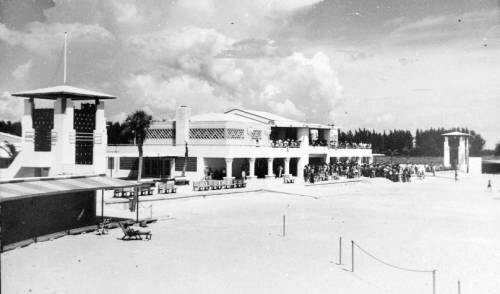
But by the late 1960s, that era was coming to a close. Changing tourism patterns, aging infrastructure and shifting priorities led to the decision to demolish the structure. In 1970, the original casino was torn down and replaced with a smaller municipal facility, according to the Sarasota County Historical Marker Database.
Today, the grand casino is gone, but traces of it remain. The pool still anchors the site and a modest concession area now serves beachgoers where a sprawling entertainment complex once stood. It’s quieter now, simpler, but if you stand there long enough, you can almost hear the music.


Comments
No comments on this item
Only paid subscribers can comment
Please log in to comment by clicking here.